
Lawyer NSW
Business Dispute Lawyers
Our business dispute lawyers help Sydney business owners and commercial clients resolve disputes quickly and cost-effectively through strategic negotiation, mediation, and arbitration.

70 Google reviews
Speak to a lawyer this week
Send us a few details and we’ll be in touch.
Lazarus Legal is Associated with the following institutions





What Is A Business Dispute Lawyer, And When Do You Need One?
A business dispute lawyer is a commercial solicitor who helps businesses resolve conflicts with other parties, whether that’s a supplier, customer, business partner, employee, or competitor. Their role is to protect your commercial interests, advise on your legal position, and work towards a resolution that keeps your business operating, ideally without the cost and disruption of going to court.
At Lazarus Legal, our business dispute lawyers regularly assist Sydney clients with situations like:
You're chasing a customer who refuses to pay outstanding invoices
A supplier has failed to deliver goods or services as agreed
You're at odds with a shareholder over the company's direction
A former employee is breaching their restraint of trade clauses
You've discovered a competitor misusing your trademark or branding
Your commercial landlord is enforcing unreasonable lease terms or rent increases
A joint venture partner is failing to meet their contractual obligations
You're locked in a disagreement over terms during a business acquisition
Why Choose Lazarus Legal's Business Dispute Lawyers
When your business is in conflict, you need a legal team that understands commercial priorities, brings the right expertise to the table, and offers billing that suits the nature of your matter.
- Commercially-Minded Legal Strategy. We've worked with Sydney businesses across a wide range of industries in 40 years. Before recommending a course of action, we take the time to understand your commercial interests and long-term goals, so our strategy protects what actually matters to your business.
- Full-Spectrum Dispute Resolution Expertise. From early-stage negotiation through to mediation, arbitration, and, where necessary, litigation, our team has the experience to guide your matter through every stage of the process.
- Flexible Billing Structures. We offer billing arrangements designed to match your matter. For complex or ongoing disputes, we offer retainer rates that give you access to our team without the uncertainty of fluctuating costs.
Common Business Disputes Our Lawyers Help Resolve
Business disputes can arise within your own company, between you and another business, or with external parties like regulators and the public. Below is a breakdown of the most common categories of business disputes our Sydney lawyers regularly handle.
Internal Disputes
Internal disputes are conflicts that arise within your own business, typically between shareholders, directors, partners, or employees.
Examples include:
- Shareholder disagreements. Conflicts between shareholders over company direction, dividend distribution, or voting rights, often involving alleged oppression of minority shareholders.
- Director and board disputes. Disagreements between directors regarding management decisions, fiduciary duties, or breaches of the Corporations Act.
- Partnership breakdowns. Falling-outs between business partners over profit sharing, workload, exit terms, or the future of the partnership.
- Employment and restraint matters. Issues with current or former employees, including breaches of confidentiality, restraint of trade clauses, or misuse of company information.
Business to Business
These are disputes between your business and another commercial party, such as suppliers, customers, joint venture partners, or counterparties to a transaction.
Examples include:
- Breach of contract claims. One party failing to meet their obligations under a commercial agreement, whether in supply, services, or distribution.
- Debt recovery and unpaid invoices. Pursuing payment from another business that has failed to settle outstanding accounts, often involving formal demands or recovery proceedings.
- Joint venture and partnership disputes. Conflicts between businesses collaborating on a joint venture project, typically around scope, contributions, or profit allocation.
- Mergers and acquisitions disputes Disagreements during or after a business sale, including warranty claims, earn-out disputes, or post-completion adjustments.
- Franchise disputes. Conflicts between franchisors and franchisees governed by the Franchising Code of Conduct, including disclosure breaches, territory disputes, and termination issues.
Business to Third Parties
This refers to disputes involving external parties outside your immediate commercial relationships, including competitors, landlords, consumers, and regulators.
Examples include:
- Intellectual property infringement. Competitors or third parties misusing your trademarks, copyright, or confidential information, or defending against such allegations.
- Professional negligence claims. Disputes involving accountants, financial advisers, consultants, or other professionals whose advice or services have caused financial loss to your business.
- Commercial leasing disputes. Disagreements with landlords or tenants over rent, outgoings, repairs, lease terms, or end-of-lease obligations.
- Property and real estate disputes. Disagreements involving commercial property transactions, including sales, easements, boundaries, development agreements, and co-ownership arrangements.
- Consumer and supplier claims. Complaints brought by customers under Australian Consumer Law, or disputes with suppliers over product quality and delivery.
- Regulatory and government disputes. Matters involving regulators such as ASIC, the ATO, or Fair Trading NSW, including investigations, penalties, or compliance issues.
How We Settle Commercial Disputes and Avoid Costly Litigation
We approach every dispute with the goal of resolving it as quickly, commercially, and cost-effectively as possible. That means starting with the least disruptive option and only escalating when circumstances genuinely require it. Below is how we work through the three core stages of alternative dispute resolution: negotiation, mediation, and arbitration.
Negotiation
Negotiation is the most direct and informal method of resolving a dispute, where parties communicate directly to reach a mutually acceptable outcome without third-party involvement. It's typically the fastest and cheapest path to resolution.
We draft letters of demand, prepare without prejudice settlement offers, and lead negotiations directly with the other party or their lawyers, ensuring every position is strategic and every settlement properly documented.
Mediation
Mediation is a structured negotiation facilitated by an independent, accredited mediator who guides both sides towards a settlement without imposing a decision. It's confidential, voluntary, and resolves the majority of commercial matters that reach this stage.
We prepare your case, advise on strategy, and represent you throughout the mediation, ensuring any agreement reached is recorded in a binding settlement deed.
Arbitration
Arbitration is a private, formal process where an independent arbitrator hears both sides and delivers a binding decision, similar to a court judgment but faster and confidential. It's typically used when a contract requires it or when parties want a definitive ruling without litigation.
We manage every stage, from selecting the arbitrator and preparing evidence to presenting your case and advising on enforcement under the Commercial Arbitration Act 2010 (NSW).
When the other party refuses to engage in good faith, when urgent court orders are needed, or when the above alternative dispute resolution (ADR) processes have been exhausted without resolution, taking the matter to court may be the only way to protect your interests. In those cases, our team has the litigation experience to advocate for you decisively.
Meet Your Business Dispute Lawyer Team
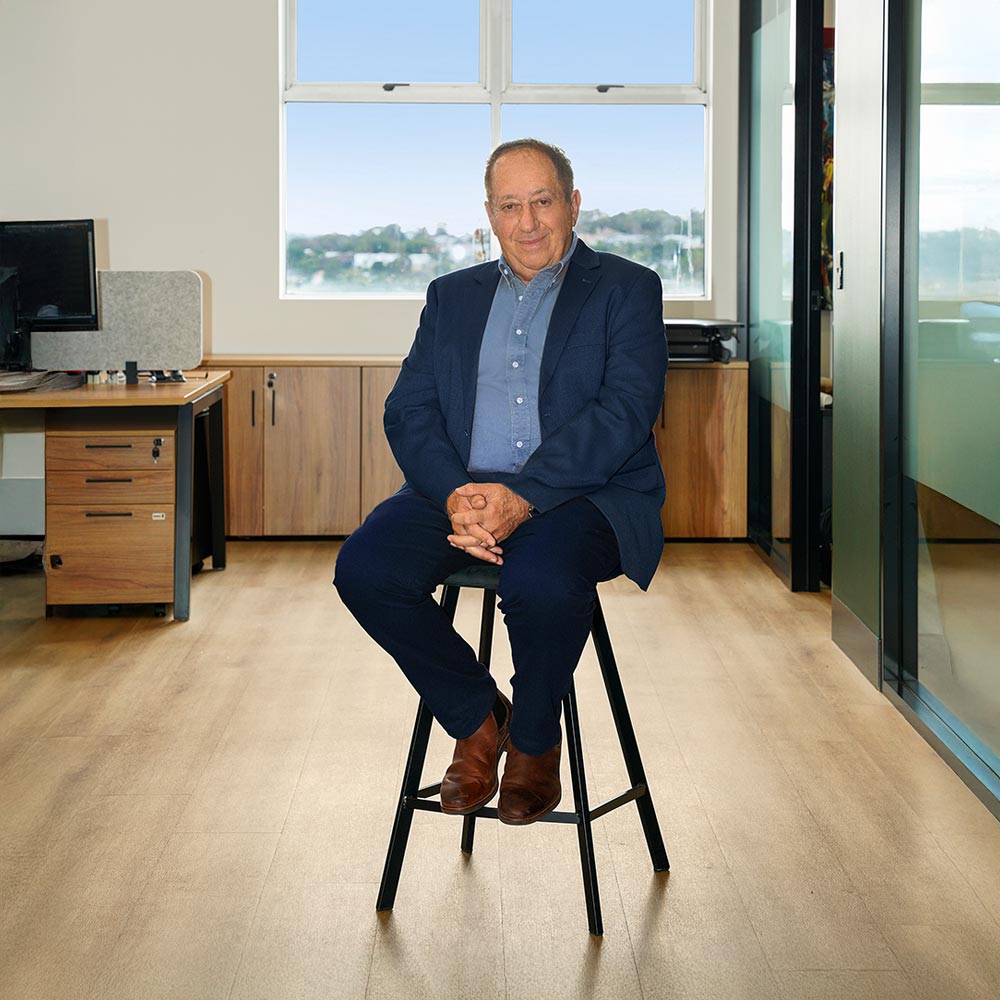
CEO, Notary Public
With decades of legal experience across Australia and South Africa, Barry is a seasoned litigator known for direct advocacy, commercial instinct, and a refusal to back down when a client’s position is sound.

Director, Principal Solicitor
A former NSW barrister and ex-Legal Director at Monster Energy (EMEA), Mark combines courtroom advocacy with in-house commercial experience to deliver dispute strategies that prioritise commercial outcomes over legal theatre.

Associate Lawyer
With a background spanning legal practice, venture capital, and business operations, Chen brings a commercially grounded perspective to disputes involving shareholders, M&A, joint ventures, and corporate governance.
What Businesses Say About Lazarus Legal
“Lazarus Legal settled our unpaid invoices so easily. Barry is so knowledgeable and the team are so quick to respond and take care of the matter so diligently. I worked with many lawyers in the past but Barry and Mark are the best ones we ever worked with. Highly recommend them!“


- The best dispute is the one that never makes it to court
Let's Talk Dispute Resolution Strategy
- (02) 8644 6000
- info@lazaruslegal.com.au
- 1/422 Oxford St, Bondi Junction NSW 2022
- 5/133 Wakefield Street Adelaide SA 5000
- 1/14 Fremantle Street Burleigh Heads QLD 4220
Our Business Dispute Lawyers Answer Your Questions
How much does a business dispute lawyer charge in Sydney?
In Sydney, business dispute lawyers typically charge between $250 and $600+ per hour, with junior solicitors starting around $250 to $400 and senior partners often charging $600 or more.
At Lazarus Legal, fees depend on the complexity of your matter. We offer upfront fixed fees for clearly scoped projects, and monthly retainer arrangements for long or complex disputes that give you consistent access without fluctuating invoices. All fee structures are agreed upfront and tailored to your specific matter, in line with the Legal Profession Uniform Law (NSW).
When should you settle or fight during a business dispute?
Settle when the cost, time, and risk of litigation outweigh the likely outcome, or when preserving the commercial relationship matters. Fight when the other party is acting in bad faith, a clear principle needs defending (such as IP or restraint of trade), or settlement offers fall well short of your minimum acceptable position. A good lawyer weighs legal costs, recovery prospects, and opportunity cost before recommending a path forward.
What should you not say during mediation?
Mediation in Australia is conducted on a without prejudice and confidential basis, but that protection has limits. Avoid:
- Threats, ultimatums, or off-the-cuff admissions of liability
- Your absolute bottom line or walk-away position too early
- False or misleading statements (these aren’t protected by confidentiality)
- Emotional statements on behalf of the business; let your lawyer frame the commercial position
How long does a business have to respond to a dispute in Sydney?
It depends on the stage. Letters of demand usually allow 7 to 21 business days to respond. Once a Statement of Claim is served in NSW, the defendant has 28 days to file a defence under the Uniform Civil Procedure Rules 2005 (NSW). Contractual disputes may also specify a notice period (often 14 or 30 days), which takes precedence.
What happens when a business doesn't respond to a dispute?
Ignoring a dispute makes things worse. If you ignore a Statement of Claim, the claimant can apply for a default judgment after 28 days, an automatic ruling in their favour with no chance to present your side. Default judgments can be enforced through garnishee orders, asset seizure, or winding-up proceedings against companies. Engage a business dispute lawyer as soon as you receive any formal demand or claim.

Litigation Lawyer, CEO, Lazarus Legal
Barry Lazarus is the founder and CEO of Lazarus Legal, with over 45 years of experience resolving commercial disputes across Australia and South Africa. He has guided Sydney businesses through contract breaches, shareholder conflicts, and partnership disputes, with a reputation for direct advocacy and a strong preference for commercial resolution over courtroom escalation.
Page Published: 21 May 2026